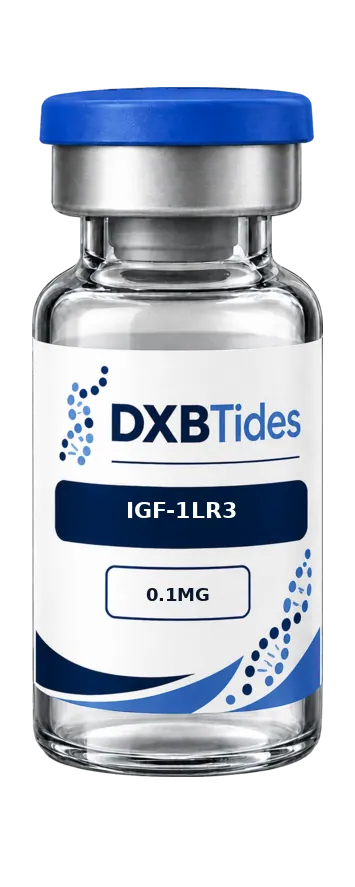
PERFORMANCE / SINGLE
IGF-1LR3
0.1MG · 1MGThis content is intended for educational and research reference only and does not constitute medical advice, diagnosis, or treatment. Experimental compounds are for research use only and are not for human consumption. Always consult qualified healthcare providers before starting any therapy.
Research Overview
A long-acting synthetic analog of IGF-1 with an N-terminal extension and Glu3 substitution, studied in tissue-growth and insulin-signalling research.
Available Strengths
- 0.1MG (IG01)
- 1MG (IG1)
Research Protocol
Reference gradual titration
| Period | Dose | U-100 units | Volume |
|---|---|---|---|
| Weeks 1–2 | 0.02 mg | 6 | 0.06 mL |
| Weeks 3–4 | 0.04 mg | 12 | 0.12 mL |
| Weeks 5–8 | 0.05 mg | 15 | 0.15 mL |
Reconstitution
≈0.333 mg/mL once reconstituted (≈333 mcg/mL)
- Draw 3.0 mL of bacteriostatic water per 1 mg vial.
- Inject slowly along the vial wall; swirl gently until dissolved.
Research context
The structural modification is reported to greatly reduce binding to IGF-binding proteins, extending the peptide's half-life from minutes to several hours; the cited literature notes an insulin-like blood-glucose-lowering effect as the primary safety concern.
Storage
−20°C for up to 12 months. 2–8°C, use within 30 days.
Research Notes
- For educational and research reference only. Not medical advice and not intended for unsupervised human use.
- Cited literature flags insulin-like hypoglycaemic effects (shakiness, confusion, sweating, dizziness) as the most significant safety concern for this compound.
References
Source reference: PeptideDosages.com · 2026-08-18 · Exact strength match with the cited source